The focused EverClean engine as a dedicated one-knob plugin. Its real-time defeedback
stage detects and removes feedback and resonant ringing while also cleaning noise, bleed and
room tail. Zero reported latency, with no channel-strip complexity.
Low-end authority and adaptive spectral focus in one insert. MAGNETAR V2 2.3.0 introduces RESOLVE with
four distinct styles inside the DRY/WET CORE path while ASCEND, STABILITY and LIMITER remain independent.
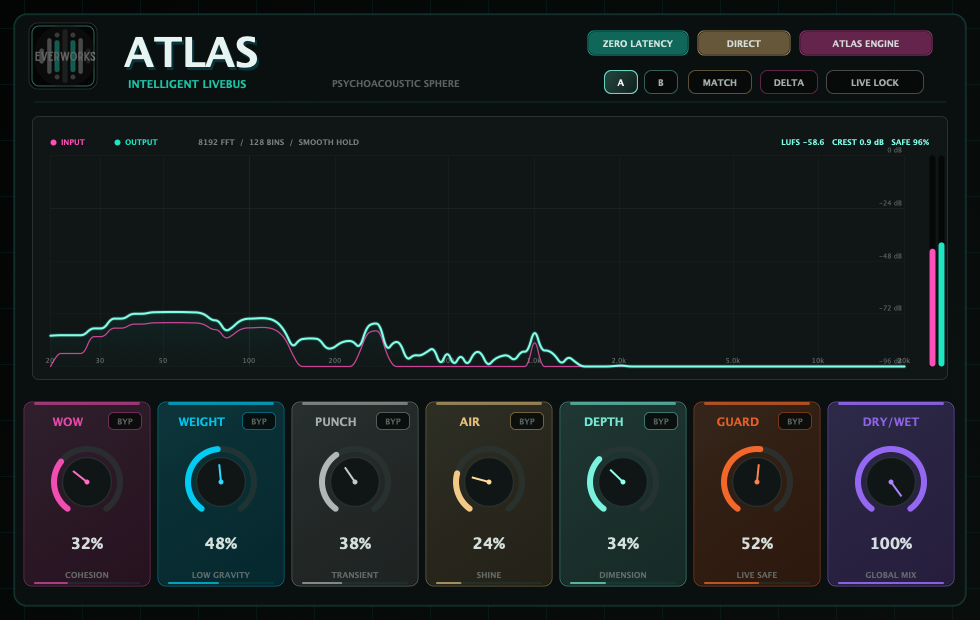
Zero-latency intelligent livebus processor for master, matrix, stream and PA buses. ATLAS adds weight,
punch, air and depth while GUARD keeps translation, low-end and peak safety under control.
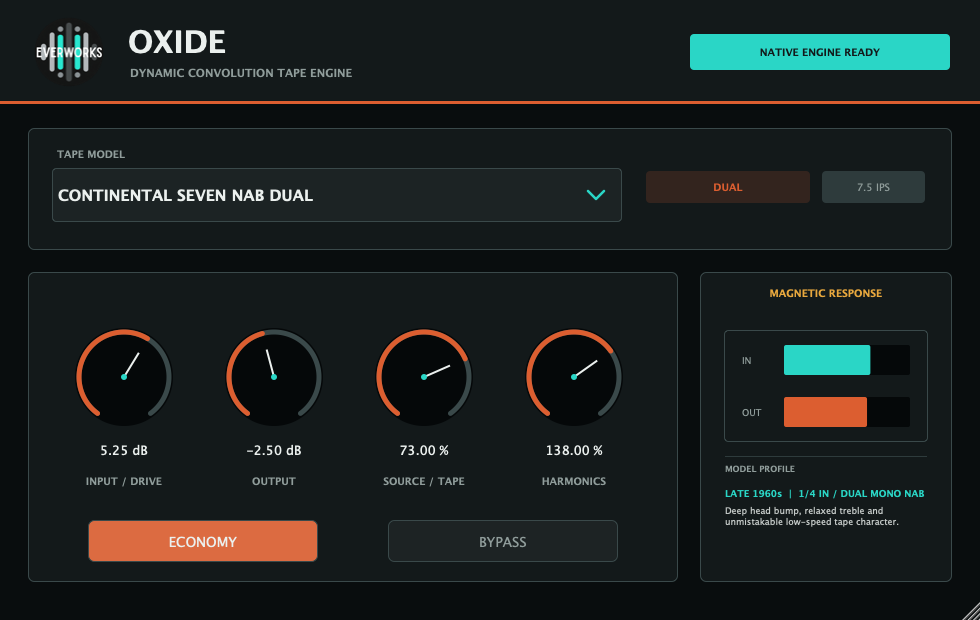
Dynamic convolution tape engine with 24 curated multitrack, mastering, low-speed, cassette and PCM models.
OXIDE combines each machine's linear response with level-dependent H2-H5 colour.
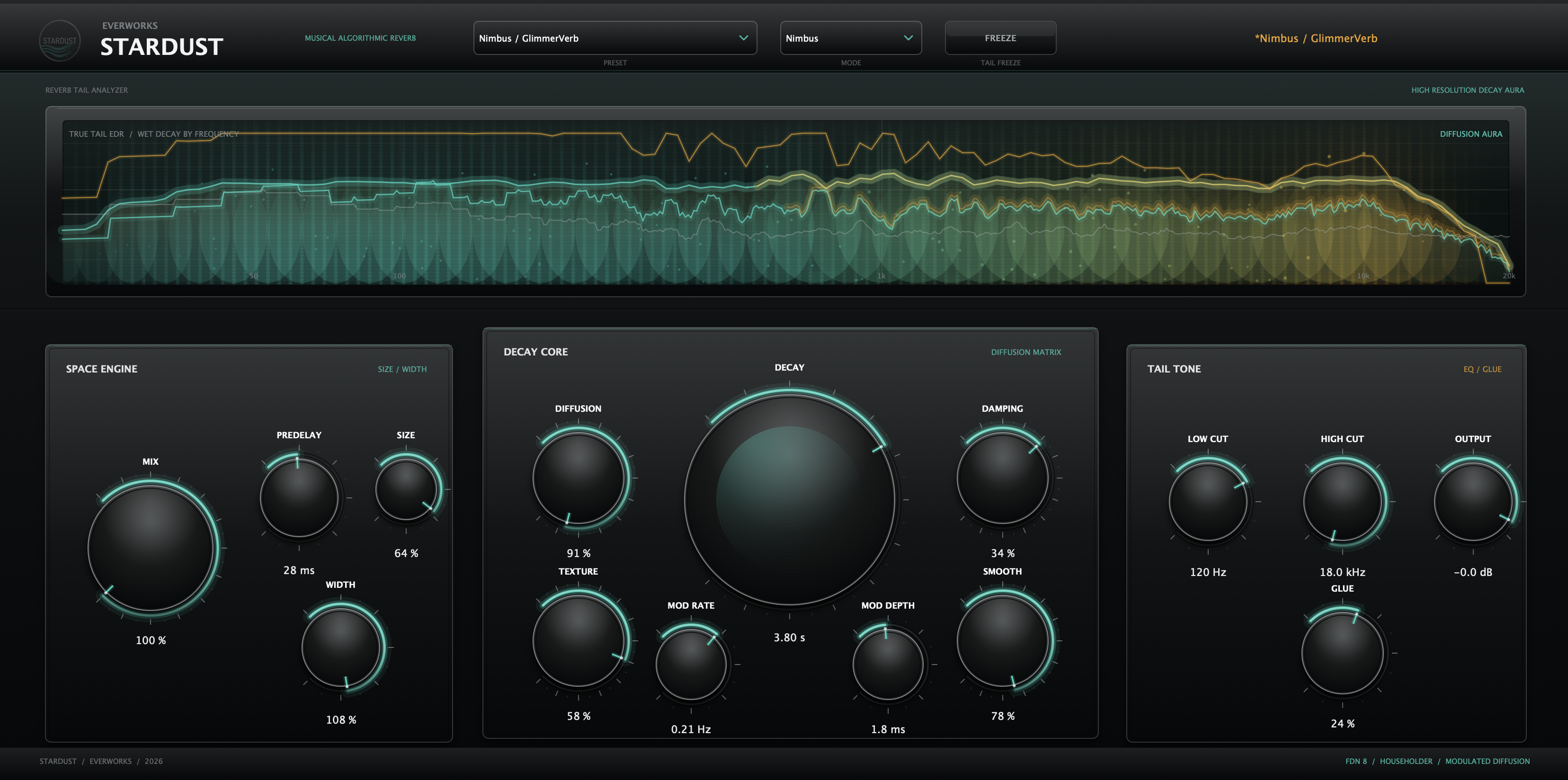
Musical algorithmic reverb with a 16-line HyperFDN core, 4D tail modulation, spectral EDR fog
and subtle glue so vocals, drums and synths bloom without washing away the source.
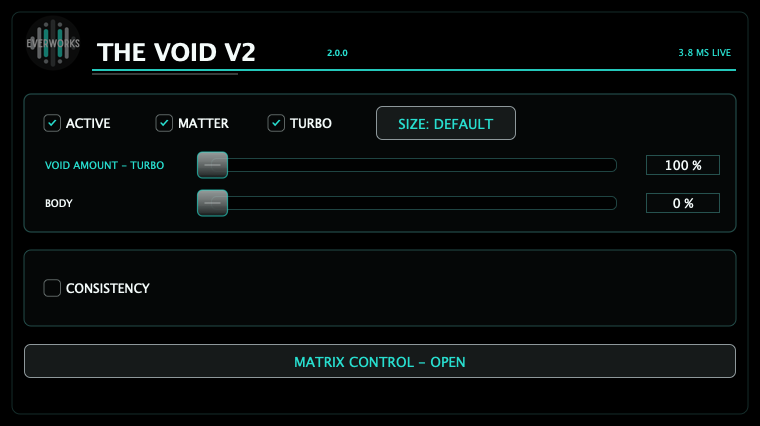
THE VOID V2 preserves the original Everworks cleanup response in a faster cross-platform engine, measured up to
40.3% lower on Apple Silicon. Turbo extends Void Amount from 100% to 200% for difficult sources without added latency.
A dedicated regeneration processor for rebuilding body, continuity and stable detail after cleanup.
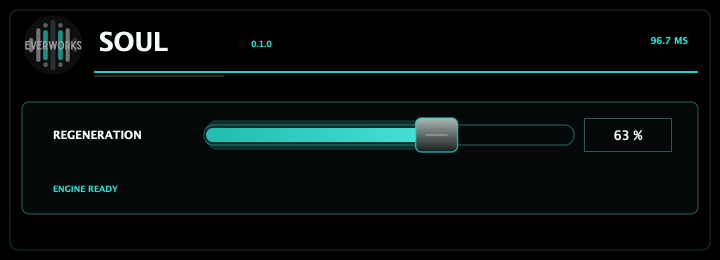
SOUL keeps the entire workflow to one Regeneration fader and a latency-aligned reconstruction path.
Zero-latency adaptive vocal EQ that observes long-term tone, compares it with one of nine tonal populations
and applies a bounded 30-band correction while the direct audio remains in the time domain.
Intelligent harmonic EQ for 75 instrument and voice profiles across 12 musical contexts, with adaptive target
matching, H2-H5 control and measured Live or phase-matched Studio processing.
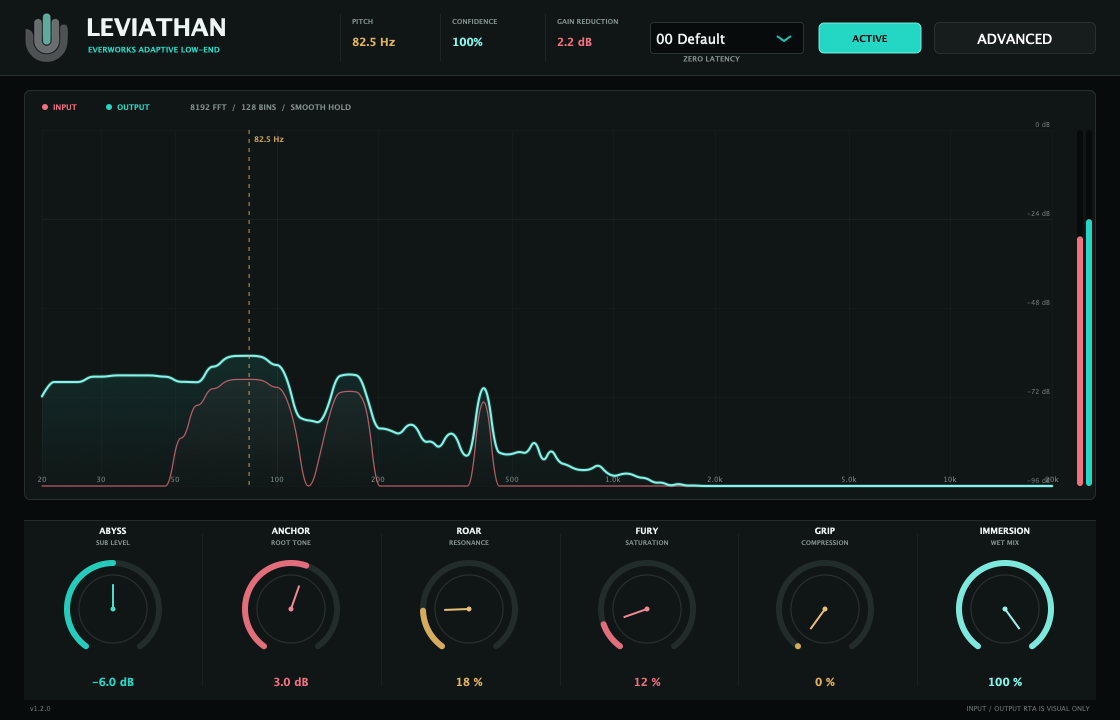
Adaptive low-end instrument with pitch-aware sub synthesis, root reinforcement, resonance, saturation,
compression and a dual high-resolution spectrum view.
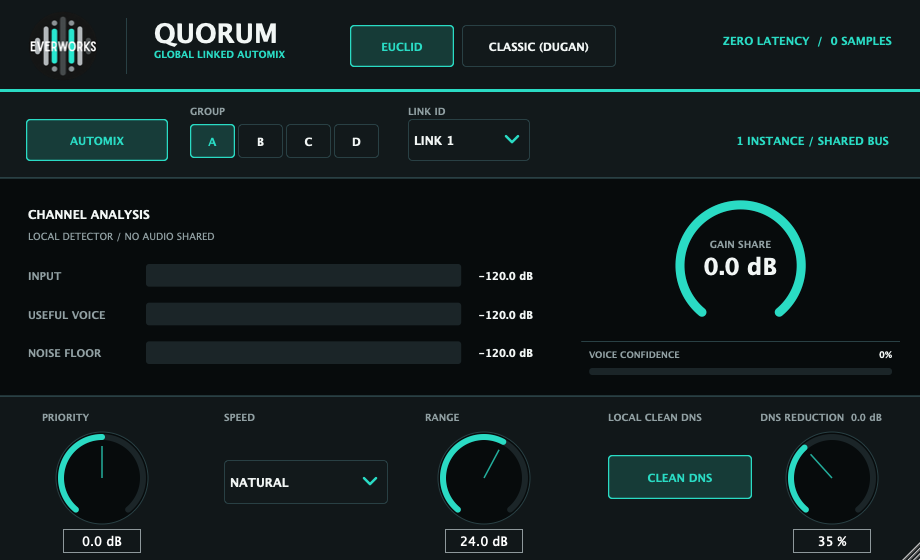
A zero-latency distributed automixer with two global models. Choose EUCLID for spill-aware source focus or
CLASSIC for proportional Dugan-style gain sharing; every linked instance follows the same mode while audio remains local.
010 samples · direct audio pathASCEND · calibrated 0-200% characterWOW · psychoacoustic glue24 models · multitrack to PCM16-line HyperFDN · 4D matrix182 samples · 3.8 ms live96.7 ms · regeneration path0 samples · causal audio path75 sources · 12 musical contexts20-300 Hz · adaptive pitch tracking1 instance per channel · no audio shared
02One knob · defeedback + cleanupSTABILITY · learn, store and recallGUARD · live translation safetyH1-H5 · level-dependent colourEDR fog · spectral tail particlesOptimized engine · macOS + WindowsOne fader · source reconstruction30-band adaptive vocal EQH2-H5 · four harmonic bands6 macros · 82 advanced parametersEUCLID spill-aware gain sharing
03Mono · stereo · live readyLIMITER · independent final controlTP · LUFS · SAFE live meters388 samples · 8.08 ms at 48 kHzTexture · Smooth · GlueTurbo · extended cleanup range48 kHz · mono / stereo9 tonal populations · source ledLive 3 samples · Studio 19200 samples · 8192 FFT dual RTA0 samples · local Clean DNS
OPTIMIZED FOR LIVE·VST3 · AU · Standalone·MAC · WIN·96kHz · 32-FLOAT·EVERWORKS BY FLUGE·OPTIMIZED FOR LIVE·VST3 · AU · Standalone·MAC · WIN·96kHz · 32-FLOAT·EVERWORKS BY FLUGE·
/ 01Overview
Built for the people.
EverClean is the dedicated one-knob defeedback and source-cleaning member of
The Clean Suite. It suppresses feedback and resonant ringing while reducing noise, bleed and
room tail, with zero reported latency.
MAGNETAR V2 2.3.0 combines low-end shaping with adaptive RESOLVE, ASCEND 0-200%, learned STABILITY,
an independent limiter, per-control bypass and dual 8192-point analysis.
ATLAS LiveBus is part of The Mastering Suite: a zero-latency intelligent
bus processor for live masters, matrices, streams and PA outputs.
OXIDE is the magnetic-colour member of The Mastering Suite: 24 curated
machines reconstructed with a complete linear response and level-dependent H2-H5 convolution.
STARDUST is the third Everworks suite plugin: a musical algorithmic reverb built around
a 16-line HyperFDN, tesseract-style delay motion and dynamic Householder feedback.
THE VOID V2 preserves the original Everworks model and its familiar cleanup response while reducing
live CPU, improving cross-platform performance and adding Turbo for difficult sources.
SOUL is the regeneration member of The Clean Suite. Insert it after cleanup and
raise one fader to recover body, continuity and stable detail without reopening the complete processing chain.
D.N.A VOCALS is an adaptive vocal EQ that compares the stable character of a source
with nine tonal populations and applies the result through a causal 30-band filter bank.
D.N.A ULTIMATE extends intelligent target matching to voices, instruments, drums and complete
mixes, then adds a controllable H2-H5 harmonic layer without hiding the spectrum.
LEVIATHAN is an independent adaptive low-end instrument: six immediate macros open into
a deep Track, Sub, Tone, Dynamics and Output architecture without adding host latency.
QUORUM is a distributed automixer with EUCLID and CLASSIC gain-sharing models.
One global selection updates every QUORUM instance in the process while each audio stream remains inside its own track.
a.A single Clean Amount control scales the complete defeedback and source-cleaning response.
b.The direct path reports zero samples, making it suitable for monitoring-sensitive vocal channels.
c.Native mono, mono-to-stereo and stereo routing keeps microphone instances efficient and predictable.
a.SUBSTANCE and IMPACT build low-end density and transient authority before the final master stage.
b.DRY/WET blends only the CORE domain: SUBSTANCE, IMPACT, RESOLVE and GLOW. At 0%, the CORE path is exact identity.
c.ASCEND controls character and density; STABILITY learns the programme and recalls its profile with the session; the limiter remains independent.
a.WOW, WEIGHT, PUNCH, AIR and DEPTH move the mix psychoacoustically, not as blunt EQ boosts.
b.GUARD watches peak, loudness and translation so the bus stays safe in live routing.
c.Every module has bypass, the global Dry/Wet works instantly, and the engine stays at 0 samples.
a.Twenty-four curated multitrack, mastering, low-speed, cassette and PCM profiles cover subtle cohesion through obvious character.
b.Input selects the dynamic behaviour while Harmonics scales H2-H5 independently from the machine's H1 response.
c.Full and Economy modes, native mono/stereo processing and latency-aligned blending keep the engine practical across a complete session.
a.16-line HyperFDN tank with geometry-modulated Householder feedback.
b.EDR tail view: the star dust is the actual wet decay by frequency.
c.Texture, smooth, glue and 4D motion keep the tail wide, soft and behind the source.
a.Up to 40.3% lower full-process CPU in the measured Apple Silicon comparison, with an optimized Windows x64 build.
b.Turbo extends Void Amount to 200% for deeper cleanup without adding latency.
c.Matter, Body, Consistency and four-band Matrix Control remain available in the measured 182-sample live path.
a.One Regeneration fader controls the complete reconstruction path.
b.Latency-aligned dry and regenerated signals preserve timing while the blend changes.
c.SOUL is designed after cleanup for post, playback and other latency-tolerant paths.
a.Nine tonal populations define a direction without replacing the source identity.
b.An 8192-sample analyzer informs a causal 30-band EQ while audio remains in the time domain.
c.Amount, Speed, Freeze and frequency bounds keep adaptation under direct control.
a.Seventy-five source profiles and twelve styles provide instrument-specific, musically contextual targets.
a.Pitch tracking follows fundamentals from 20 to 300 Hz and drives the generated sub and root layers.
b.ABYSS, ANCHOR, ROAR, FURY, GRIP and IMMERSION provide a complete low-end workflow from one view.
c.The advanced pages expose 82 parameters for tracking, synthesis, tone, dynamics and output safety.
a.Insert one instance per microphone, then choose the same Group and Link number on the channels that should cooperate.
b.EUCLID identifies the focused source using useful-voice evidence and temporal correlation; CLASSIC distributes gain proportionally from each channel's detected energy.
c.The model selection is global. Priority, Speed and Range remain local controls; Clean DNS is optional and never enters the shared bus.
b.H2-H5 harmonics remain visible in the RTA and controllable globally or across four bands.
c.Live reports 3 samples; Studio uses a 1920-sample phase-matched high-quality path at 48 kHz.
1716724401307569knobpresetsFDNmacrosmodels%faderbandsprofilesmacrosparametersfocused source-cleanup controlmusical factory presetsHyperFDN feedback lineslivebus controls plus global mixcurated dynamic convolution machineslower live CPU measured against the previous releasecomplete regeneration workflowcausal adaptive EQ bandssource-specific target profilesimmediate low-end controlsfocused parameters per channel
0189503883.896.70300samplessamplesmodessamplessamplesmsmssamplessamplessamplessamplesreported plugin latencyreported latency at 48 kHzChamber · Plate · Hall · Nimbus · Infinityzero-latency direct livebus pathreported latency at 48 kHz3.8 ms measured source pathaligned regeneration path at 48 kHzzero reported latencyreported latency in Live modereported host latencyreported host latency
100%free after registration
/ 02How it works
Three stages. One signal path.
01Listen
Track the source and feedbackBuild the foundationPsychoacoustic bus readFollow the incoming levelEnergy decay reliefOptimized source cleanupFeed the cleaned sourceLong-term vocal observationIdentify source and contextTrack the fundamentalPublish local evidence
EverClean follows the incoming microphone, tracks emerging feedback and resonant ringing, and maintains an independent cleanup state for every plugin instance.SUBSTANCE follows the low-end foundation while IMPACT restores front-edge authority. Set these two before moving into the master finishing stage.ATLAS follows crest, loudness, transient density and broad spectral balance so the macros react like a live engineer touching the bus.OXIDE tracks the local peak envelope and uses it to select and interpolate the captured dynamic state of the active machine.STARDUST reads the wet tail as a frequency-time field, so the visual fog follows the decay instead of decorating it.THE VOID V2 analyzes the incoming source and applies the original Everworks cleanup response through an optimized native engine.Place SOUL after THE VOID or another cleanup stage. Its reconstruction path receives the already-focused source instead of trying to clean it again.A periodic-Hann LTAS analyzer measures the stable vocal spectrum while the direct signal continues uninterrupted.Choose one of 75 source profiles and a musical context so the target is relevant to the instrument, register and production style.A guarded pitch detector follows the useful 20-300 Hz fundamental while the dual analyzer keeps input and output energy readable.Each instance measures input energy, useful voice, noise floor, confidence and an eight-bin temporal signature, then publishes only that compact metadata to its selected Group and Link.
▶
02Decide
One useful decisionAscend through the master stageEnhance under guardRebuild the magnetic responseDense, not metallicExtend cleanup depthRaise RegenerationCompare, then boundMatch and shape harmonicsBuild and control weightChoose the group decision law
Clean Amount scales the complete defeedback and source-cleaning response without exposing internal bands, timing or model controls.ASCEND is the calibrated character macro. STABILITY learns a representative section, stores the profile with the session and adds no audio-path latency.WOW glues, WEIGHT anchors, PUNCH restores front edge, AIR opens presence, DEPTH widens perceived space, and GUARD keeps the bus inside live limits.Partitioned convolution applies the complete H1 response and the level-dependent H2-H5 branches. Harmonics scales colour without removing the machine profile.Prime delay spacing, all-pass delay drift and a 4D-modulated Householder matrix build density while avoiding obvious ringing.Normal mode preserves the original 0-100% response. Turbo extends the range to 200% for sources that need stronger cleanup.The single fader moves through a latency-aligned blend in the processing domain, so Regeneration changes the reconstruction rather than acting as a simple output gain.D.N.A VOCALS compares the source with the selected tonal population and solves a restrained correction inside independent boost, cut and frequency limits.The adaptive EQ follows the selected target while H2-H5, motion, character and dynamics determine how harmonic energy is generated and distributed.Sub synthesis, root reinforcement and resonant tone are shaped through saturation and compression, with each stage available in the advanced pages.EUCLID compares useful-source evidence and rejects correlated spill. CLASSIC follows proportional Dugan-style sharing from channel energy. Changing the mode in one instance changes it across the entire linked QUORUM process.
▶
03Deliver
Immediate outputLimit and verifyDirect live outputBlend and gain matchGlue behind the sourceSame live timing, lower CPUStop when it feels naturalCausal adaptive outputChoose Live or StudioDeliver a controlled low endApply locally, share no audio
The processed signal remains on a zero-reported-latency path with deterministic bypass and native mono or stereo routing.Use LIMITER drive only when required, compare at matched level, and verify input against output on the dual RTA. Host PDC remains stable when the limiter is bypassed.The path is direct and zero-latency: no lookahead master limiter, no offline-style latency, just controllable live enhancement with Dry/Wet and instant bypass.Source/Tape combines latency-aligned dry and processed paths, then Output restores matched level for an honest bypass comparison.Per-line damping, wet ducking and subtle saturation let the HyperFDN bloom musically without masking vocals or leads.Normal and Turbo both use the same measured 3.8 ms live path. Turbo adds no extra latency.Increase Regeneration only until body and stable detail return. SOUL is deliberately separate from the cleaner so restoration can be judged and bypassed on its own.A 30-band biquad bank moves at the selected speed in the time domain, so the adaptive EQ reports zero samples of latency.Live keeps monitoring immediate at 3 samples, while Studio switches to a 1920-sample phase-matched path for maximum rendering quality at 48 kHz.Mono control, output EQ, high-pass filtering, limiting and global mix keep the generated weight practical at zero reported samples.Speed smooths the local gain, Range limits attenuation and optional Clean DNS reduces local noise. Audio never leaves the plugin instance and the host sees zero samples of latency.
/ 03Features
One-knob defeedback. No setup maze.Eight bypassable controls and an 8192-point dual RTA.Seven live controls for a bigger, safer bus.Twenty-four machines. One level-aware tape engine.Six tools for a 4D musical space.V2: lower CPU with controllable Turbo depth.One fader for source regeneration.Six controls for adaptive vocal direction.Source-aware EQ and harmonics in one readable engine.Six macros above an 82-parameter low-end engine.Linked automixing without a central rack.
f.01
Defeedback + Clean AmountSUBSTANCEWOW24-model library16-line HyperFDN engineOptimized Everworks engineRegenerationNine tonal targets75 source profilesABYSS · Sub LevelOne instance per channel
One large control scales feedback suppression and source cleanup together, from untouched to fully engaged.Low extension and sub fill tuned for techno masters and large PA sub arrays.Psychoacoustic cohesion that makes a live mix feel more finished without needing master-bus latency.Multitrack, stereo mastering, dual-mono, portable, cassette and early PCM profiles cover subtle cohesion through obvious character.A 16-line feedback tank uses prime spacing, all-pass delay drift and dynamic Householder mixing to build density without metallic repeats.The original Everworks cleanup response runs locally in an optimized engine for macOS and Windows.One horizontal control introduces the complete regeneration result without exposing internal reconstruction parameters.Genome, Organic, Gravity, Neon, Pulse, Gloss, Depth, Focus and Air define the direction of travel.Detailed profiles cover voices, drums, basses, guitars, keys, orchestral instruments, electronic sources and full mixes.Adds a pitch-following sub layer with tracking offset, fallback tuning, gate depth and percussive response available underneath.Use QUORUM directly on each microphone track. Instances discover one another through the shared control bus, so no multichannel wrapper or central audio router is required.
f.02
Zero reported latencyIMPACTWEIGHTInput / DriveSpectral EDR fogTurbo · 100-200%Aligned reconstructionAmountMusical contextANCHOR · Root ToneEUCLID / CLASSIC global mode
The host receives zero samples of plugin delay, keeping monitoring and live vocal routing immediate.Transient weight for kick authority and drops, shaped to avoid broad master gain jumps.Low-gravity bus support for PA and stream feeds, tuned to feel solid before it feels louder.Input does more than raise level: it moves the selected machine through its captured dynamic kernel states.The analyzer draws the wet decay as a moving frequency cloud, making tail energy readable at a glance.At 200%, Turbo extends suppression depth while keeping the same reported latency and a protected output range.Dry and regenerated paths stay latency aligned, avoiding a timing jump as the fader moves.Blend from the natural source toward the continuously learned correction without replacing its identity.Twelve style contexts reshape the target for the role the source must play, rather than applying one generic curve everywhere.Reinforces the detected fundamental with controllable frequency, Q and gain instead of applying a broad fixed bass boost.EUCLID prioritises source focus and spill rejection. CLASSIC provides proportional Dugan-style gain sharing. Select either model once and every QUORUM instance follows it.
Mono, mono-to-stereo and stereo layouts are handled explicitly, with one efficient pass for mono microphones.Adaptive spectral focus with NATURAL, FORWARD, TIGHT and OPEN behaviours, followed by controlled openness.Transient focus for drums, playback and full-band buses, with safety compensation built around live gain staging.H1 reproduces frequency and phase while H2-H5 add level-dependent magnetic colour through partitioned FFT convolution.Deterministic stereo taps define depth in the first milliseconds while preserving the dry front edge.Matter and Body restoration, four-band Matrix tuning and Consistency stay inside the measured 3.8 ms live path.SOUL does not duplicate the cleaner. It is a focused second stage for post, playback and other latency-tolerant workflows.Slow, Medium and Fast determine how quickly the EQ follows a changing vocal performance.Second through fifth harmonics are measured in the RTA, shown with persistent trails and controlled independently.Shapes focused resonant character around the tracked low end, with drive, slope and mix controls for exact placement.Eight temporal energy bins let the group detect similar material arriving across microphones and avoid opening several channels for the same source.
f.04
ASCEND 0-200%AIRHarmonics 0-200%Damping and diffusionFreezeMotion and characterFURY · SaturationGroup A-D · Link 1-8
Aligned dry at 0%, calibrated reference behavior at 100%, and extended compression, density and width up to 200%.High-band clarity and expensive shine shaped for live systems, not a static top-end shelf.Scale nonlinear colour independently. Zero keeps the machine's H1 profile, 100% is calibrated and higher settings exaggerate texture.Per-line feedback absorption lets high frequencies die naturally before the body of the tail.Hold the learned correction when the vocal reaches the right balance, then release it when adaptation should resume.Transient or Sustain motion, Even or Odd character and linked or independent dynamics define how the harmonic layer behaves.Adds audible harmonic density with drive, bias, even/odd balance, shape, target range and selectable quality.Create independent automix pools inside one DAW or plugin server. Only instances with the same Group and Link number compete with one another.
f.05
STABILITY PROFILEDEPTHAligned Source / TapeGlue and duckingFrequency boundsFour bands and pitch followGRIP · CompressionPriority · Speed · Range
Learn a representative section, store the programme profile and scale its fitted minimum-phase correction independently with no added audio-path latency.Perceived dimension and width enhancement for buses that need depth without reverb smear or added latency.A latency-aligned source path makes parallel blending and bypass comparisons phase coherent across the full 0-100% range.Subtle saturation and envelope-aware wet ducking keep the reverb expensive, present and out of the way.Automatic or manual low and high edges plus independent maximum boost and cut keep correction focused.The advanced panel distributes harmonic processing across four bands and can track the fundamental of pitched material.Controls low-end dynamics with threshold, ratio, knee, attack, release, range and automatic makeup options.Bias important microphones, choose Fast, Natural or Smooth movement, and set the maximum attenuation without disturbing the shared detector logic.
f.06
LIMITER + analysisGUARD + Dry/WetFull / EconomyFive musical modesMid and outputLive, Studio and safetyIMMERSION · Wet MixLocal Clean DNS
Independent 0-12 dB limiting, CORE-only parallel blend, per-control bypass, dual 8192-point RTA, A/B, gain match, Delta and Live Lock keep final decisions measurable.Live-safe macro with global blend and per-module bypass, so engineers can add only the lift the show can take.Full evaluates H1-H5. Economy keeps the complete linear response with H1-H3 and a bounded dynamic tail for larger sessions.Chamber, Plate, Hall, Nimbus and Infinity cover tight vocals, lush plates and cinematic tails.Focus adaptation on the stereo centre and match the final level with output trim for honest A/B checks.Measured latency is reported to the host, with Delta, auto gain, mono safety and alias protection available for reliable A/B decisions.Blends the complete engine against the dry source while output EQ, mono control, filtering and limiting protect the result.A causal denoise stage works independently on each track after gain sharing. Its audio and state remain local and the path still reports zero samples.
/ 04Core modules
Eight bypassable controls, two clearly divided domains.
OXIDE signal path. Follow, convolve, blend and gain match.
o.0124-model selector
o.02Input / Drive
o.03Local level follower
o.04Dynamic kernel interpolation
o.05H1 linear response
o.06H2-H5 magnetic colour
o.07Harmonics scaling
o.08Aligned Source / Tape
o.09Output gain match
o.10Full / Economy engine
o.11Mono / Stereo processing
o.12AU / VST3 / Standalone
/ 04Core modules
D.N.A VOCALS signal path. Deep analysis, causal audio.
d.018192-sample LTAS analyzer
d.02Tonal population matcher
d.0330-band response solver
d.04Causal biquad filter bank
d.05Target selector
d.06Amount blend
d.07Slow · Medium · Fast
d.08Freeze state
d.09Low / high frequency bounds
d.10Maximum boost / cut
d.11Mid focus
d.12Output trim
/ 04Core modules
D.N.A ULTIMATE signal path. Target intelligence plus harmonic design.
u.0175 source target profiles
u.0212 musical contexts
u.03Adaptive target EQ
u.04H2 · H3 · H4 · H5 engine
u.05Harmonic amount
u.06Transient / Sustain motion
u.07Even / Odd character
u.08Linked / Independent dynamics
u.09Four-band harmonic balance
u.10Pitch follow
u.11Delta · Auto Gain · Mono Safety
u.12Live / phase-matched Studio
/ 04Core modules
THE VOID V2. Original Everworks cleanup, with Turbo when needed.
THE VOID V2 2.0.2 · native 48 kHz processing with automatic model-rate SRC at 44.1, 88.2, 96 and 192 kHz · Turbo extends Void Amount to 200%.
v.01Original Everworks cleanup engine
v.02Void Amount · normal 0-100%
v.03Turbo · extended range 100-200%
v.04Matter / Body · source restoration
v.05Consistency · target and speed
v.06Four-band Matrix · 3.8 ms live path
/ 04Core modules
SOUL signal path. One control, one defined job.
SOUL 0.1.0 · dedicated source regeneration after cleanup.
s.01Regeneration · complete amount
s.02Latency-aligned reconstruction
s.03Body and continuity recovery
s.0448 kHz processing path
s.05Mono and stereo operation
s.06Signed beta packages in preparation
/ ATLASLiveBus release
ATLAS LiveBus is ready for live tests.
Built from the zero-latency Magnetar base and redesigned for direct live buses: bigger perceived mix, safer output, instant bypass, Dry/Wet and clear TP/LUFS/SAFE feedback.
Register once and download the available Everworks plugins for free. No subscription, no watermark, no paid license. In return, we ask for real-world feedback from engineers and testers.
🛡️
Real-World Telemetry
Help us refine the Everworks engines. Share feedback on specific sources, microphones, rooms, stages and demanding setups.
🤝
Shape the Beta
Suggest features, vote on new DSP modules, and collaborate directly with the Everworks developers on future versions.
macOS ARM64 · macOS x86_64 · Windows x64macOS Universal (arm64 + x86_64) · Windows x64Apple Silicon development build · release targets pendingmacOS ARM64 · macOS x86_64 · Windows x64
Package
Signed + notarized macOS PKGs · Windows x64 installerSigned and notarized Universal DMG · Windows installerSigned macOS and Windows beta packages in preparationSigned and notarized Universal DMGSigned and notarized Universal DMGSigned + notarized macOS DMGs · Windows x64 installer
Modes
Clean Amount · Active / BypassClean Master · Master Safe · Techno Weight · KS28 Sub Fill · Kick Authority · Air Glue · Festival CheckWOW · WEIGHT · PUNCH · AIR · DEPTH · GUARD · Dry/Wet24 models · Input / Drive · Output · Source / Tape · Harmonics · Full / EconomyChamber · Plate · Hall · Nimbus · InfinityVoid Amount · Turbo 100-200% · Matter / Body · Consistency · Matrix ControlRegenerationGenome · Organic · Gravity · Neon · Pulse · Gloss · Depth · Focus · Air75 sources · 12 styles · H2-H5 · Live / StudioABYSS · ANCHOR · ROAR · FURY · GRIP · IMMERSIONEUCLID / CLASSIC global mode · Automix · Group A-D · Link 1-8 · Priority · Speed · Range · Clean DNS
13 Ventura or newer · Universal13 Ventura or newer13 Ventura or newer13 Ventura or newer · Universal13 Ventura or newer13+ Intel · 14+ Apple SiliconmacOS beta package in preparation13 Ventura or newer · Universal13 Ventura or newer · Universal13 Ventura or newer · Universal13 Ventura or newer · separate Apple Silicon and Intel packages
Memory
Zero allocation (audio thread)
Precision
float32 deterministic
CPU
Apple Silicon · Intel · Windows x64Apple Silicon · Intel · Windows x64Optimized for Apple Silicon · Intel supportedApple Silicon · Intel · Windows x64 · Economy mode availableOptimized for Apple Silicon · Intel supportedOptimized native processing · up to 40.3% lower measured on M3 Max · optimized Windows x64Apple Silicon development buildApple Silicon + IntelApple Silicon + IntelApple Silicon · Intel · Windows x64Apple Silicon · Intel · Windows x64
Release package
macOS AU
Logic Pro compatible
macOS VST3
Ableton · Reaper · Cubase compatible hosts
Windows VST3
VST3 compatible hosts
Standalone
Included for quick local testingNot included · designed for one plugin instance per track
/ 06THE VOID V2 instructions
V2 optimized processing, Turbo, Matter, Consistency and Matrix.
THE VOID V2 2.0.2 · 44.1-192 kHz Auto SRC update
The original Everworks response with a faster engine and new Turbo range.
V2 preserves the original Everworks model and live timing in an optimized engine.
Turbo changes Void Amount to 100-200% for stronger cleanup without changing reported latency.
At 44.1, 88.2, 96 and 192 kHz, automatic internal sample-rate adaptation preserves the model's native 48 kHz spectral and temporal geometry.
Normal Void Amount from 0-100%
Turbo Void Amount from 100-200%
Matter enable and separate Body amount
Consistency Target and Speed
Matrix 1-4 amount, trim, bypass, solo and crossovers
Twenty-four machines, gain staging and complete production workflows.
OXIDE Tape Engine 1.0.1
Learn what changes the machine and what only changes level.
The visual guide explains the complete H1-H5 signal path, every control,
Full and Economy processing, all 24 model characters, latency, installation
and gain-matched workflows for mastering, drums, bass, vocals and parallel colour.
EverClean is a cleanup processor, not a tone preset. Start low, level-match the result and stop when the source is clean enough.Start with ASCEND at 100% and compare at matched level. Learn a representative section before raising STABILITY, then use the independent limiter last.ATLAS is intentionally audible when you push it, but it is built for live translation: the macros add perceived finish while GUARD, Dry/Wet and per-module bypass keep the bus under control.Yes. OXIDE is a colour processor. Use Input to choose the magnetic response, then match Output carefully so model character is not confused with added loudness.It is designed to add space without stealing the dry source. Damping, ducking and glue keep the tail behind the vocal or lead.THE VOID V2 is built as a cleaner, not a tone effect. Push Void Amount until the source tightens; enable Matter and add Body only when the cleaned signal needs reconstruction.SOUL is a regeneration processor rather than an EQ preset. Level-match the result and stop when body and stable detail return naturally.D.N.A VOCALS applies a bounded correction and keeps the source as its starting point. Amount determines how far the vocal moves toward the selected tonal population.D.N.A ULTIMATE starts from a source-specific target, then lets you add and shape H2-H5 harmonics. Amount and harmonic controls remain independent, with Delta and auto gain for honest checks.LEVIATHAN is deliberately audible, but its generated sub, root, resonance, saturation and compression are independent. Start with the six macros low and verify with IMMERSION at matched level.Automix changes level by design, not tone. EUCLID is the spill-aware focused model; CLASSIC is proportional Dugan-style gain sharing. With Clean DNS at zero, neither mode adds local denoise.
Can I run it on in-ear monitor mixes?
Yes. EverClean reports zero samples of plugin latency and is designed for monitoring-sensitive microphone paths.Yes. Use conservative settings first and A/B against bypass at matched level.Yes. Use conservative settings first and A/B against bypass at matched level.Not on latency-critical monitoring paths. OXIDE reports 388 samples at 48 kHz, about 8.08 ms, and is intended for buses, mixing, mastering and latency-tolerant tracking.Yes. Use conservative settings first and A/B against bypass at matched level.Yes. THE VOID V2 has measured 3.8 ms in real testing and is intended for monitoring-sensitive routing.Not on a latency-sensitive monitor path. SOUL reports 4641 samples at 48 kHz, approximately 96.7 ms, and is intended for post, playback or latency-tolerant routing.Yes. The analyzer informs a causal time-domain EQ, so D.N.A VOCALS reports zero samples of latency.Yes. Live mode reports only 3 samples at 48 kHz. Studio mode reports 1920 samples and is intended for phase-matched high-quality rendering.Yes. LEVIATHAN reports zero samples of host latency. Its low-end generation is designed for tracking, live playback, buses and studio inserts.Yes. QUORUM reports zero samples of latency. For monitor mixes, use a dedicated Group/Link and a conservative Range, or disable Automix on channels that must remain fixed.
Will it work on broadcast and corporate gigs?
Yes. Its one-control workflow is intended for fast deployment on lecterns, headsets, lavaliers and vocal microphones.Yes. Version 2.3.0 is the official production build, and host/source feedback remains welcome.Yes. The beta is intended for real production testing, and we want host/source feedback.Yes, when its reported latency is acceptable. Economy reduces CPU for large sessions while Full keeps H1-H5 available for final buses and printing.Yes. The beta is intended for real production testing, and we want host/source feedback.Yes. It is especially relevant for lecterns, lavaliers, headsets and vocal mics in reflective or noisy rooms.Yes, after cleanup and where its reported latency is acceptable. It is designed as a separate reconstruction decision, not as the first live insert.Yes. It is designed for vocal sources in live, broadcast and studio workflows; Freeze can hold a learned correction when the balance is right.Yes. Use Live for tracking, broadcast and performance; use Studio when latency is secondary to maximum rendering quality.Yes. Use conservative ABYSS and ROAR values on full-range systems, then open the advanced output page for mono control, filtering and limiting.Yes. Lecterns, lavaliers, headsets, panels and broadcast microphone groups are its primary workflow: one instance per channel, all assigned to the same Group and Link.
How is it licensed?
Yes. Register free to unlock the download. No payment, no subscription, no watermark.
How can I help improve it?
Run it on real shows, tell us what works, report edge cases and suggest new modules. That is the exchange: free access for useful real-world feedback.
// Free with registration · Full features
Run the next show withEverCleanon every channel.
SOUL beta packages are being prepared.
Download OXIDE Tape Engine 1.0.1.
Create a free account to unlock the download. No payment, no subscription, no watermark.
MAGNETAR V2 2.3.0RESOLVE adds four genuinely different adaptive spectral behaviours: NATURAL, FORWARD, TIGHT and OPEN. The control is exact identity at 0%, the normal working region sits around 50%, and 100% is intentionally strong. macOS ARM64 and Intel are signed, notarized and stapled; Windows x64 is validated and currently unsigned.
QUORUM 0.3.2Plugin Nap resilience keeps linked instances and global mode changes alive while hosts suspend silent audio. macOS ARM64 and Intel are signed, notarized and stapled; Windows x64 is tested but currently unsigned.
THE VOID V2 2.0.2Original Everworks cleanup, Turbo 100-200% and automatic 48 kHz model-rate SRC at 44.1 / 88.2 / 96 / 192 kHz. The native 48 kHz path is unchanged. macOS Universal package is signed, notarized and stapled; Windows x64 is optimized and currently unsigned. For 192 kHz stereo, a host buffer of 256 samples or more is recommended.
EverClean 1.0.1 Windows CPU updateStatic oneMKL backend measured 24.2% lower mono CPU and 21.7% lower stereo CPU in the same-system A/B. No external MKL DLL is required. Windows x64 is validated and currently unsigned.
Signing pendingThe plugin page is live; official macOS and Windows beta installers will be added after signing and validation.
OXIDE Tape Engine 1.0.1macOS Universal is signed, notarized and stapled for Apple Silicon and Intel. Windows x64 is validated and currently unsigned. Free registration unlocks both MediaFire downloads.
Everworks Suite · AU · VST3 · Standalone · available builds vary by product · download unlocks after free registrationQUORUM 0.3.2 · AU + VST3 on macOS · VST3 on Windows · download unlocks after free registration
👤
Join the community
Enter your details to post suggestions, vote on features, and join the beta board.